




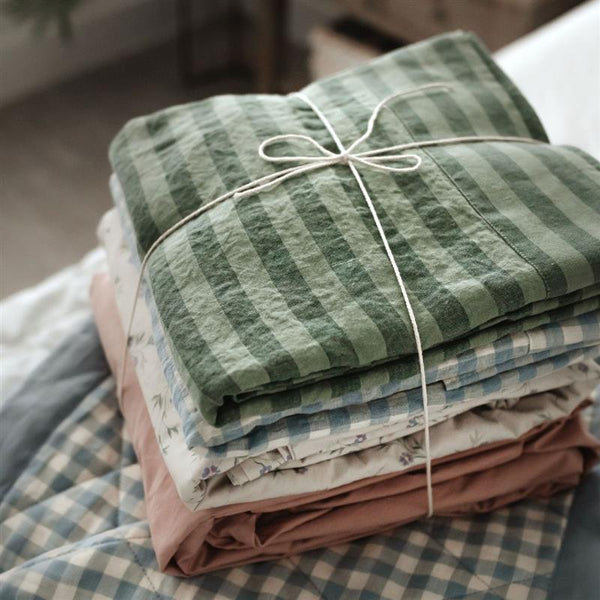


Whether you reach for a tablecloth, table runner, or a simple set of napkins, table linens are an easy way to make every meal feel a little more special. To keep them looking their best and lasting for years, a little care goes a long way. From sorting and washing to treating stains, drying, and storing, here’s everything you need to know to keep your table linens in top shape.
How should I prep linens for washing?
Shake off crumbs. Before washing, give your table linens a good shake or brush off any crumbs. This keeps your machine running smoothly, prevents clogs, and makes sure your linens get a thorough clean.
Unfold your linens. Always unfold your napkins before washing so each one can be cleaned evenly. The same goes for tablecloths or runners – if they’ve been folded temporarily, open them out fully before popping them in the machine.
Sort by color. Keep lights and darks separate to avoid color transfer. If your striped or gingham table linens are yarn-dyed, like ours, they’re colorfast and won’t bleed. But a good rule of thumb is if there’s any white in your pattern, wash it with your lights.
Pre‑treat stains ASAP. For everyday spills, blot your tablecloth or napkins gently (don’t rub), then rinse or spot‑treat with a mild detergent before washing. For tougher stains, like red wine, coffee, or grease, apply a gentle detergent or a natural stain remover and let it work its magic before washing. Repeated, gentle treatments usually work better – and are kinder to your linens – than aggressive scrubbing or bleach.

How should I wash my tablecloths and linens?
Use a gentle detergent. Choose one that’s free of bleach and optical brighteners. Harsh formulas can fade colors and weaken fibers over time. To avoid product build-up, use a sparing amount, and skip the fabric conditioner – linen naturally softens over time, so there’s no need to add it.
Don’t overfill the drum. Linens need space to move freely in the wash, so avoid overcrowding the machine for an even clean and fewer creases. As a guide, keep your drum no more than three-quarters full.
Wash on a warm cycle. For linen or linen blend table linens, we recommend a warm cycle – hot enough to clean thoroughly, but gentle enough to protect the fibers and keep your linens looking their best.
Handwash delicate items. For embroidered or more delicate pieces, a handwash cycle in cold water with mild detergent is the way to go.
Avoid common laundering mistakes. Overly long cycles, frequent hot washes, harsh detergents, or mixing colors can all damage your linens.
How often should I wash my tablecloths and linens?
How frequently you wash your table linens depends on how often you use them – and what they’re used for – but as a general guide:
Napkins: Wash after every meal, or after a handful of light uses. Regular washing keeps them hygienic and fresh.
Tablecloths: Wash after a few uses, or straight away if there are signs of spills or stains e.g. after a dinner party, kids’ birthday, or anything particularly messy.
Runners: These can get away with fewer washes, so hold off putting them in the machine unless they’re marked or need a freshen up.
Spot‑clean between washes. For all the above, small spills don’t always call for a full wash. A quick blot and spot treatment will help prevent over-washing and unnecessary wear, keeping your linens looking their best for longer.

What’s the best way to dry my table linens?
Air drying is gentlest. Lay your linens flat or hang them on a clothes line or airer. Air drying protects the fibers, prevents shrinkage, and keeps colors looking vibrant.
Tumble dry if you’re short on time or space. If you prefer to use the dryer, opt for a low heat setting and remove your linens while they’re still slightly damp. Leave them to finish drying on a line or airer – this minimizes creasing and avoids exposing the fabric to too much heat.
Watch out for strong sunlight. Try to keep colored linens out of harsh, direct sunlight while drying. Sunlight can naturally bleach fabric – great for whites, but not ideal for colors or darker fabrics.
Do I need to iron my table linens?
It’s entirely up to you. Much like linen bedding, we think the natural texture and gentle rumpled look of our table linens is all part of their charm.
Shake to avoid creases. The best way to prevent big creases is to remove your linens promptly from the washing machine and give them a couple of good flicks before drying.
Iron for a wrinkle-free finish. If you prefer a smoother, more formal finish, iron your tablecloths, napkins or runners while they’re still slightly damp. Iron on both sides using a medium heat setting with plenty of steam.

How should I store my table linens?
Store only when completely clean and dry. Even slight dampness can cause mildew or unpleasant smells, so make sure your linens are fully dry before putting them away.
Keep linens in a cool, dry place. Avoid sealed containers – your linens need airflow to stay fresh. A cool, dry, well-ventilated area is ideal.
Roll or fold carefully. Rolling your tablecloths, runners, and napkins helps prevent deep creases. When stacking folded items, place heavier pieces, like tablecloths, at the bottom and lighter items, like napkins, on top.
Choose breathable storage
Linen and linen blend fabrics need to breathe, so avoid storing them in plastic boxes, which can trap moisture and cause yellowing. For longer-term storage, opt for linen or cotton storage bags to keep your linens in good condition.
Common spills & stains
How can I get red wine out of a tablecloth?
A sign of a good party, but one of the most notorious stains on table linens. After blotting away excess liquid, start with cold water and a little dish soap. Next, apply white vinegar and let it soak for 20 minutes before rinsing.
If the stain persists, try hydrogen peroxide: pour just enough to cover the stain in a shallow dish, let it sit for 10 minutes, then rinse. Finish with a cold machine wash. For stubborn stains, you might need to repeat these steps.
Tip: A detergent with enzymes (biological detergent) is often best, and you can also try a regular stain remover to help lift red wine.
Does white wine neutralize red wine spills? In a pinch, white wine can dilute a fresh red wine spill, minimizing the stain. It won’t remove it, but it’s better than nothing! You can also try sparkling water, using the fizz to lift the stain. Blot the area afterwards with a clean cloth – remember, don’t scrub!

How should I remove oil or grease from table linens?
These stains can be tricky. Blot off any excess with a paper towel or clean cloth. Sprinkle a generous amount of baking soda over the spot and leave for 15 minutes.
Add a few drops of dish soap or mild detergent, rub gently with a soft cloth or brush, and let sit for another 15 minutes. Finish with a cold machine wash and repeat if needed.
How can I get rid of candle wax from a tablecloth?
If melted wax drips onto your tablecloth, start by blotting as much as possible with a clean cloth. Let any remaining wax harden, then gently scrape it off with a butter knife.
Next, sandwich the stained area between two sheets of paper towels or brown paper. Run an iron on the lowest setting over the top layer, replacing the paper and repeating until no more wax transfers.
Finally, treat any leftover residue with a stain remover and wash your tablecloth on a cool cycle.
Caring for your table linens
At Piglet in Bed, our collections and homeware pieces are made for living – designed to be used and enjoyed every day, not stored away and forgotten. Washing gently, promptly treating stains, and giving thought to how you dry and store your table linens will make sure they stay beautiful and fresh for longer. With a little care and attention, you can continue to enjoy your tablecloths, napkins, and table runners for many meals and gatherings to come.


